

How do I know if my dog is pregnant?
Jun


If your female dog has recently been in season and may have mated, or if you are following a canine artificial insemination process, you might be wondering when you will know if she is pregnant, and how you will be able to tell. While some signs can appear quite early, others may take several weeks to become noticeable. Understanding what to look out for can help you determine whether your dog may be expecting puppies and when it might be time to seek veterinary advice. So, how do you know if your dog is pregnant? And what is the most reliable way to carry out a dog pregnancy check?
Why is it important to identify dog pregnancy early?
Recognising a pregnancy as early as possible can help you provide the appropriate care and support your dog needs. This is really important as pregnancy places additional demands on a dog’s body. With early confirmation you can make informed decisions about nutrition, exercise, veterinary care, and prepare for the arrival of puppies. All of this can help ensure the best possible outcome for both the mother and her puppies.
What are the earliest signs of dog pregnancy?
Many dog owners expect obvious symptoms soon after mating, but this is rarely the case. In reality, during the first few weeks, signs can be subtle and may easily be missed. Some of the earliest signs of pregnancy in dogs include:
Changes in appetite
Slight weight gain
Increased affection towards owners
Reduced energy levels
More frequent sleeping
Mild nausea or occasional vomiting
Changes in nipple size or colour
However, it is important to remember that these symptoms can also occur for reasons unrelated to pregnancy. As a result, they should not be considered definitive proof that your dog is expecting puppies.
How does a dog’s body change during pregnancy?
As pregnancy progresses, physical changes often become more noticeable. Around three to four weeks after conception, you may begin to observe:
Enlarged nipples
A slightly swollen abdomen
Weight gain
Increased appetite
Behavioural changes
By the fifth or sixth week, these signs typically become much more obvious. Your dog’s abdomen may become visibly larger as the puppies continue to develop.
What behavioural changes might indicate pregnancy?
Behavioural changes are often among the first signs owners notice. Pregnant dogs may:
Become more affectionate
Seek extra reassurance from family members
Appear calmer than usual
Sleep more frequently
Become less interested in strenuous exercise
Start gathering blankets or bedding materials
Some dogs may also become slightly withdrawn or prefer spending time alone. As every dog is different, behavioural changes can vary significantly between individuals.
Can you perform a dog pregnancy check at home?
While it is possible to observe physical and behavioural changes at home, there is no completely reliable dog pregnancy check that can be carried out without professional assistance or equipment.
It’s important to remember that many signs of pregnancy can resemble symptoms associated with hormonal changes following a season, including false pregnancy. This means that relying solely on visible signs can lead to confusion and doubt. For this reason, for the best care for your dog, you should seek veterinary confirmation.
How can a dog’s pregnancy be confirmed?
Specialists and veterinarians can use several methods to confirm pregnancy. These include:
Palpation: An experienced veterinarian may be able to feel developing puppies through the abdomen approximately three to four weeks after conception.
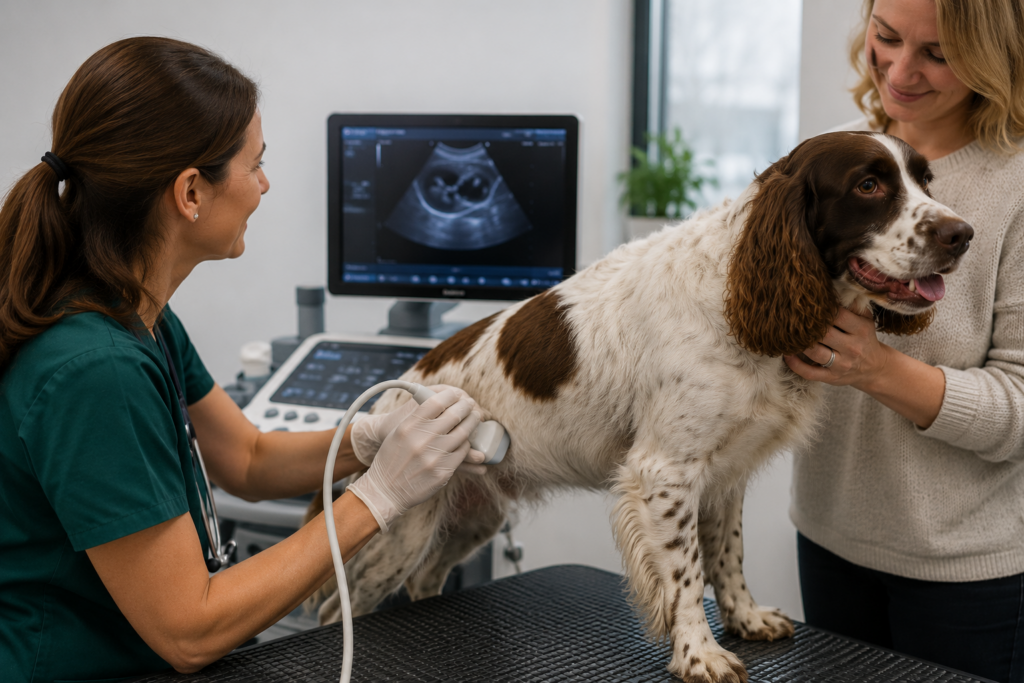
Ultrasound scanning: An ultrasound is one of the most common methods used for a dog pregnancy check. It can often confirm pregnancy from around 28 days after mating and can provide information about puppy development.
Blood tests: Veterinary blood tests can detect pregnancy-related hormones. These are typically performed around four weeks after mating.
X-rays: X-rays are generally used later in pregnancy, often after 45 days, when puppy skeletons have developed sufficiently to be visible. This method can help estimate the number of puppies expected.
What is a false pregnancy?
One reason that pregnancy can be difficult to identify is because some dogs experience false pregnancies. This occurs when hormonal changes cause a dog to display symptoms similar to those of a genuine pregnancy despite not carrying puppies. The signs of a false pregnancy may include:
Nesting behaviour
Enlarged mammary glands
Milk production
Changes in appetite
Behavioural changes
Abdominal enlargement
Because these symptoms can closely mimic genuine pregnancy, a professional dog pregnancy check is often necessary to determine whether puppies are actually developing.
How long does dog pregnancy last?
The average dog pregnancy lasts approximately 63 days from conception, although this can vary slightly between individual dogs. Pregnancy is often divided into several stages:
Weeks 1 to 3: Early development with few visible signs.
Weeks 4 to 5: Physical changes become more noticeable.
Weeks 6 to 8: Significant growth of puppies and increased nutritional needs.
Week 9: Preparation for labour and birth.
What should you do if your dog is pregnant?
If you suspect your dog may be pregnant, there are several steps you should take. These include:
Booking a veterinary appointment
Providing a balanced, high-quality diet
Avoiding unnecessary medications unless approved by a vet
Maintaining moderate exercise
Preparing a quiet and comfortable whelping area
Monitoring your dog’s health throughout the pregnancy
Regular veterinary guidance can help ensure both mother and puppies remain healthy during this important period.
What are the benefits of a professional dog pregnancy check?
There are several advantages to seeking professional confirmation rather than relying solely on visible signs. These include:
Accurate diagnosis: A professional can confirm whether your dog is genuinely pregnant and rule out false pregnancy.
Early health monitoring: Pregnancy-related health issues can be identified and managed at an early stage.
Better preparation: Knowing how far along the pregnancy is can help you prepare for whelping and puppy care.
Nutritional guidance: A vet or specialist can recommend appropriate dietary adjustments to support healthy puppy development.
Peace of mind: Professional confirmation removes uncertainty and allows you to plan with confidence.
What are the best practices for monitoring a pregnant dog?
If your dog’s pregnancy has been confirmed, there are several best practices to follow throughout the process:
Attend all recommended veterinary appointments.
Monitor weight gain without overfeeding.
Provide regular but gentle exercise.
Ensure access to fresh water at all times.
Create a calm and stress-free environment.
Prepare a safe whelping area before the due date.
Watch for signs of labour as the pregnancy nears completion.
So, how do you know if your dog is pregnant?
Knowing whether your dog is pregnant can sometimes be challenging, particularly during the early stages when signs are subtle. While changes in appetite, behaviour, and physical appearance may provide clues, the most reliable dog pregnancy check is one carried out by a veterinarian or specialist using equipment such as ultra-sound scanners.
Early confirmation allows you to provide appropriate care, prepare for the arrival of puppies, and ensure the health and wellbeing of both mother and litter. If you suspect your dog may be pregnant, seeking professional advice is always the best course of action.